

Other lines of work in Digitalization and Business
The digitalisation of business encompasses very broad concepts and processes that affect various parameters of the company and its reality. For this reason, the organisers of the congress, being aware that it is sometimes difficult to delimit whether or not a paper has a place in a specific field, propose this line called "Other lines of research".
Capacity for digitalization and robotisation of the Spanish productive structure and the role of public administrations.

For years now, the need to increase the degree of digitalisation and the incorporation of robotics and artificial intelligence into economic activity, particularly in developed economies, has been assumed, not without some fear. Undoubtedly, in the wake of the COVID-19 pandemic and the attention being paid to [...]
The digital divide, the new threat to digital transformation

ICTs (Information and Communication Technologies) offer numerous advantages: greater access to information, reduced costs in the labour sector, greater connectivity between people, etc. But digitalisation is not taking place equally all over the world, and here too, there is an imbalance, and it is receiving the [...]
Digitalization, Agenda 2030 and other challenges for the social economy

Digitalisation is one of the key tools in the business processes of companies. Social Economy organisations cannot be left out of this field and for this reason it is one of the challenges to be met in the transformation processes that will take place in the coming decades. Another of the [...]
Implications of artificial intelligence for the 21st century economy and business

The pandemic caused by COVID-19 triggered a global digital transformation process. To enhance this digital transformation process, it has been necessary to develop different products and technologies. These include Artificial Intelligence, Big Data and the Metaverse. The first two technologies have already been implemented to a certain extent in different dimensions of the [...]
Challenges of digitisation in the field of law and the administration of justice

This thematic line will cover all work related to the digitisation processes of commercial companies at any level of their operation: incorporation, convening and holding of general shareholders' meetings, voting on resolutions, holding of board meetings, registry entries, filing of annual accounts, tax returns, tax returns, etc.
Digitalization processes and sustainability in the agri-food sector
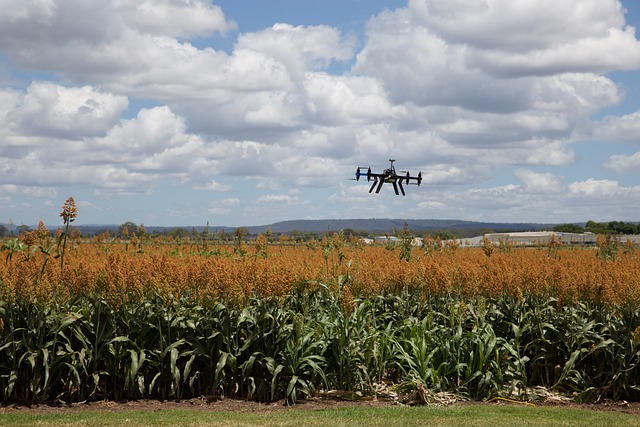
The use of data is increasingly being used by producers and distributors not only to gain a deeper understanding of consumer tastes and habits, but also to make their entire production process efficient and sustainable. Throughout history, consumption patterns have varied to a greater or lesser extent.
Digitisation of the financial system, digital means of payments, financial inclusion and decentralised finance

In recent years, the rise and development of digital technologies is transforming the financial sector to the point where we are facing a paradigm shift. The emergence of new models of new generation banking intermediation based on taking advantage of the benefits of emerging technology and with a clear orientation towards the [...]
Communication, law and digital society: new technologies, social networks, media and digital law

In today's society, we observe the significant impact of new models and means of communication on digital platforms, which have profoundly transformed interactions between people and new ways of relating to each other. With the evolution of the digital medium and new forms of online presence, the need has arisen to [...]
The future of Data Science and Machine Learning in business and enterprise
Artificial Intelligence is already part of a technological revolution that has fundamentally changed the way we live, work and interact. Today, Artificial Intelligence is already a reality although most organisations are still in the early stages, developing pilots, small use cases and defining their internal governance models. [...]
 English (UK)
  Español