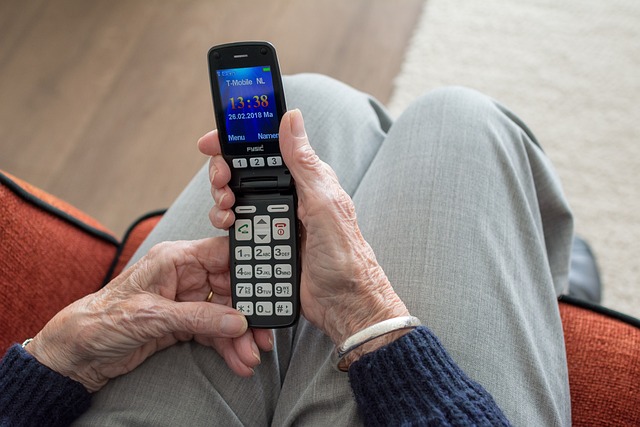
ICTs (Information and Communication Technologies) offer numerous advantages: greater access to information, cost reductions in the labour sector, greater connectivity between people, etc. But digitisation is not happening equally all over the world, and here, too, there is an imbalance, known as the digital divide. Internet access has allowed many of us to get on with our lives despite the pandemic thanks to modalities such as teleworking or online education, but the reality is not the same all over the world.
In fact, almost half of the world's population - around 2.9 billion people - do not even have access to the Internet. Inequality in access to the Internet and ICTs affects 52 % of women and 42 % of men in the world. This rift becomes even deeper when we talk about regions.
We must also distinguish between problems related to Internet access and digital literacy, i.e. the learning process that enables a person to acquire the skills to understand and exploit the educational, economic and social potential of new technologies. Technological discrimination is a form of poverty and social exclusion, depriving part of the population of essential resources for development and wealth creation.
Specifically, the works submitted can be along the following lines:
- Digital inclusion: moving towards digital equality as a path to development.
- Multidisciplinary perspectives on gender studies in the digital transformation of business.
- Boosting the digital skills and employability of women in the digital economy.
- Equality as a key factor for business growth.
- CSR: digital and social transformation to bridge the digital divide.
Dr. Mª Peana Chivite Cebolla
Coordinator of the Bachelor's Degree in Business Administration and Management
DEKIS Research Group
Lecturer in the area of Economics and Business in Bachelor's and Master's degrees.
Main lines of research: CSR, financial transparency, digital transformation, social economy.

Dr. Maripaz Muñoz Prieto
Director of the Quality Service of the UCAV
Director of the Master's Degree in Advanced Accounting and Account Auditing
Research Group "Social Economy and Sustainable Development Goals (ESODS)
Lecturer in Economics and Business
His research deals with environmental accounting, social responsibility and Sustainable Development Goals (SDGs).

Ms. Beatriz María Sastre Hernández
Graduate in Statistics from the University of Salamanca.
Master's Degree in Advanced Multivariate Data Analysis and Big Data from the University of Salamanca.
Member of the DEKIS Research Group of the Catholic University of Avila.
ORCID: https://orcid.org/0000-
 English (UK)
  Español